



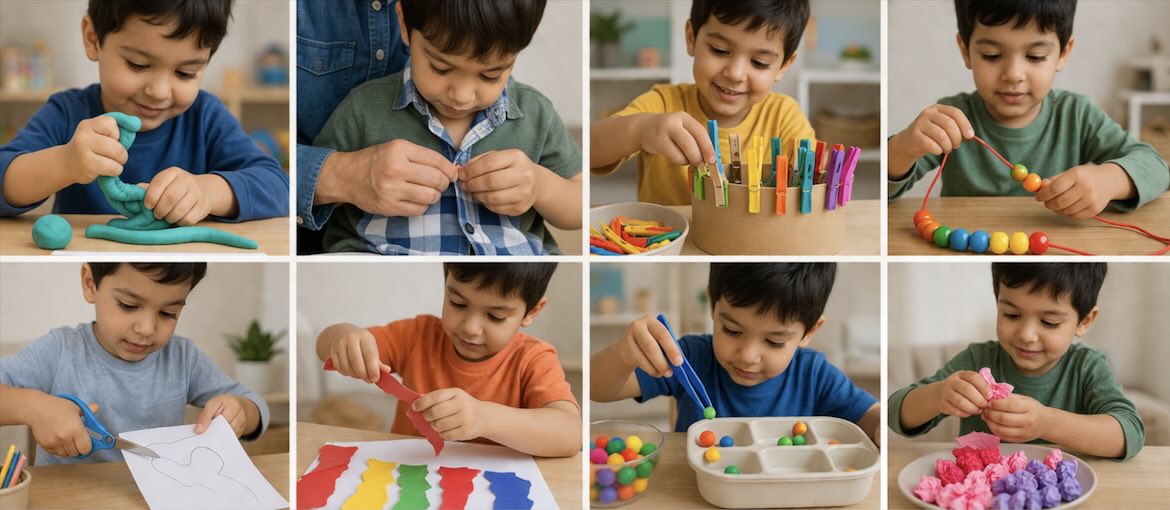







Parents and caregivers can guide children through short, hands-on tasks that fit into daily routines. As a result, children gain better grip, finger control, and focus without special tools or complex plans. The ideas ahead show how small actions each day can lead to steady progress in hand skills.
1. Playdough squeezing and rolling
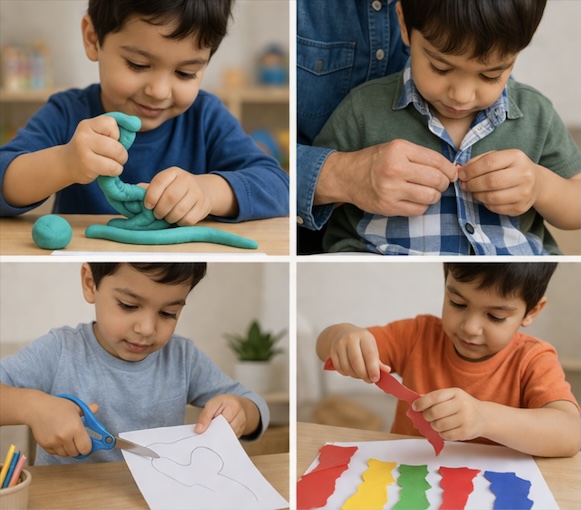
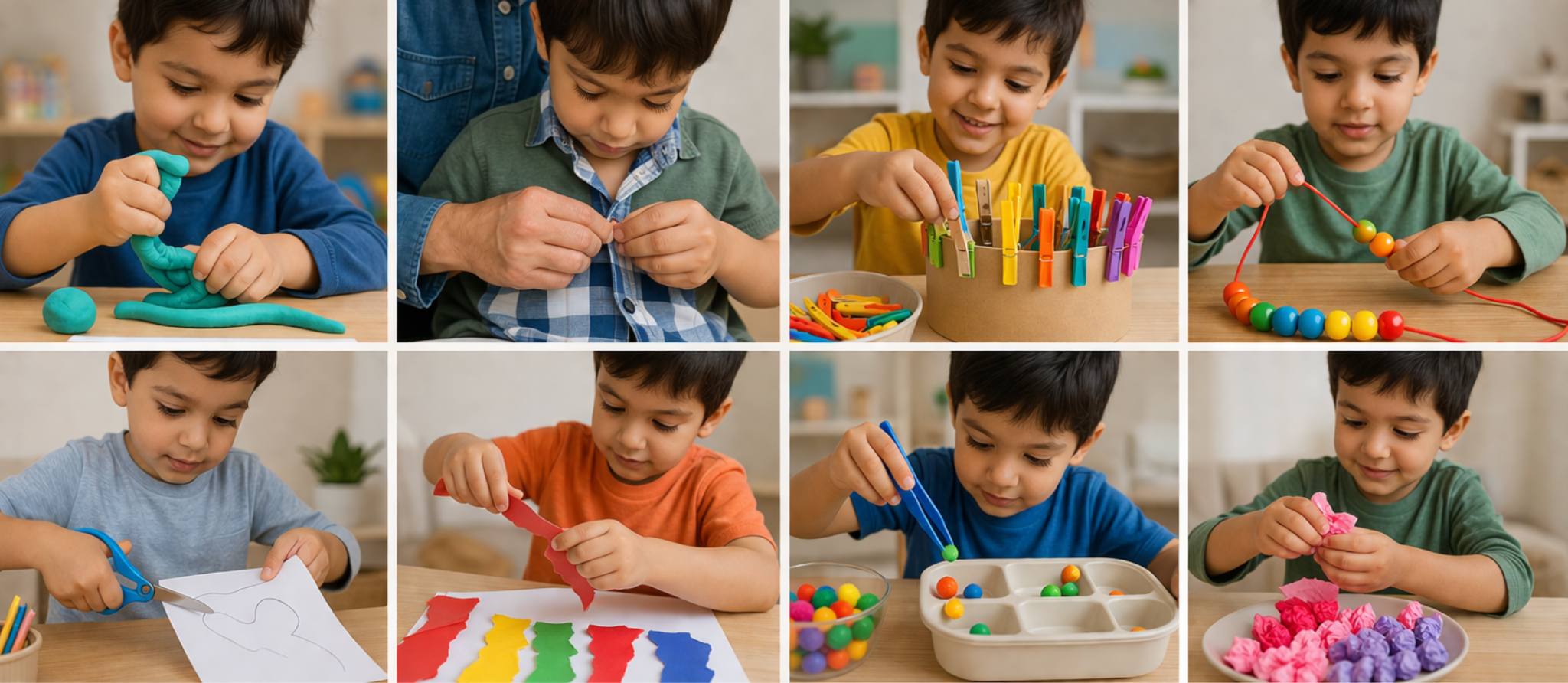
Playdough offers one of the simplest fine motor activities for children because it builds hand strength through touch and pressure. Many parents include it in simple fine motor activities for children since it requires only dough and a flat surface.
Children squeeze the dough with their whole hand, then press it between their fingers. This action builds small hand muscles. As a result, they gain better control of tasks like button use and pencil grip.
They can roll the dough into balls with their palms. They can also roll long “snakes” with both hands. In addition, they pinch and poke the dough to shape letters or small objects.
These short, hands-on tasks fit well into daily routines at home.
2.Buttoning and unbuttoning shirts
Button and unbutton shirts to build hand strength and control. This task uses both hands at the same time. One hand holds the fabric steady, and the other pushes the button through the hole.
Start with large, flat buttons on a loose shirt. In addition, pick buttons with a color that stands out from the fabric. This helps the child see the hole and line up the button.
Practice at a calm time of day. As a result, the child can focus on each step without rushing. With steady practice, finger control and hand skills improve.
3.Using clothespins to pinch and release
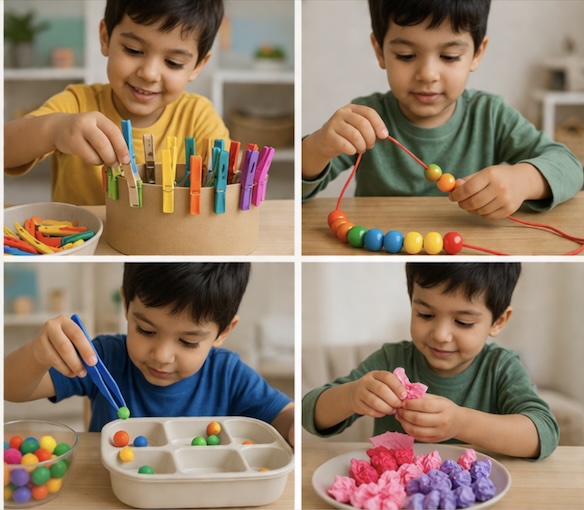
Clothespins offer a simple way to build hand strength at home. A child can pinch the clothespin open, then release it onto the edge of a box or piece of cardboard. This action works the thumb and first two fingers.
Parents can ask the child to clip clothespins around a bowl or paper plate. In addition, they can sort by color or count each clip to add a learning task. As a result, the child uses both hand control and focus.
Clipping cards or small pieces of paper also helps. Therefore, the child practices steady pressure and controlled release with each squeeze.
4.Stringing large beads on a shoelace
String large beads onto a shoelace to build hand strength and control. A stiff lace tip helps the child guide the bead with more accuracy. As a result, the child uses both hands together and improves coordination.
This task also builds the pincer grasp. The child picks up each bead with the thumb and index finger, then slides it down the lace. In addition, the eyes track the bead as it moves, which supports hand and eye control.
Start with big beads and a firm lace. Later, use smaller beads to add challenge and improve precision.
5.Cutting shapes with child-safe scissors
Cutting shapes with child-safe scissors builds hand strength and control. It also improves hand-eye coordination. As a result, children gain better control over small hand movements.
Start with straight lines on thick paper. Then move to curves and simple shapes like squares and circles. This step-by-step approach helps a child feel success and build skills over time.
Child-safe scissors with blunt tips work best for beginners. An adult should show how to hold the paper with one hand and cut with the other. Therefore, the child learns to use both hands together.
Short, simple practice sessions keep focus strong and reduce frustration.

6.Tearing strips of paper for collage
Tearing strips of paper for a collage builds hand strength and control. A child holds the paper with one hand and pulls with the other. This action uses both sides of the body at the same time.
In addition, the fingers must pinch, grip, and pull with care. These small movements help improve hand use and hand-eye coordination. As a result, the child gains better control of tasks such as writing and cutting.
Parents can draw simple lines on paper as a guide. The child then tears along the line and glues the strips onto a page to form a picture.
7.Picking up small objects with tweezers
Tweezers help children build hand strength and control. A child uses the thumb and index finger to grip and lift small items. This action supports the pincer grasp used for writing and buttoning clothes.
Place beads, pom poms, or dry beans in a bowl. Then ask the child to move each item to another container with tweezers. For example, sort objects by color or size to add a simple challenge.
This activity also supports hand and eye control. In addition, it builds focus and patience through short, clear tasks. Start with larger objects, then use smaller ones as skill improves.
8.Crushing tissue paper into balls
Crushing tissue paper into small balls builds hand strength and control. A child uses the thumb and fingers to pinch, press, and squeeze the paper into a tight shape. This simple task works the small muscles in the hand.
First, an adult tears tissue paper into small squares. Then the child presses each piece into a ball with one hand. For a greater challenge, the child uses only the thumb and index finger.
In addition, this activity supports skills needed for writing and buttoning clothes. It also improves focus as the child repeats the motion with care.
9.Rolling a ball of tape with fingers
Ask the child to tear a short strip of tape and crumple it into a small ball. He then rolls the sticky ball between his thumb and each finger.
This action works the small muscles in the hand and supports pencil control. It also helps finger isolation, which children need for buttons and zippers.
Next, he can press the ball flat and shape it again. For extra challenge, have him switch hands or close one eye.
However, keep the tape ball small so it fits on the fingertip. As a result, he practices hand strength and control in a simple, low cost way.
10.Stacking blocks or small cups
Stacking blocks or small cups helps children build hand control and hand-eye coordination. They grasp each piece, place it with care, and adjust their grip as the tower grows. As a result, they practice steady hand use and better control of finger movement.
Small blocks require a precise pinch, which supports pencil grip later on. In addition, cups add a balance challenge because the child must line them up to keep the tower upright. This simple task also builds focus and patience.
Parents can change the height or size of the items to keep the task fresh. Therefore, the child stays interested and continues to practice key hand skills.
Conclusion
Simple motor activities at home help children build hand strength and control. These tasks support schoolwork, self-care, and daily activities such as buttoning clothes or holding a spoon.
With steady practice, they gain better grip, hand control, and focus. Parents who set aside a few minutes each day give children a clear path to steady progress.
All activities should be age-appropriate and supervised by an adult. If you have concerns about your child’s motor development, consult a pediatrician or therapist.

Ashley Pugh ;
Ashley Pugh is one of the Co-Founders of Familydaysout.com and has been committed to writing family related content since 2008. There isn't much about family attractions that Ashley doesn't know, after visiting hundreds of them worldwide over the last 20 years.
Leave a comment