










This guide breaks down what matters when you’re choosing sneakers as a mom—fit, cushioning, support, durability, and style that works with your closet. New Balance appears often in that conversation (for reasons we’ll explain), but you’ll also see where other makers shine. Think of this as a buying framework with examples, not an advertorial for any one label.
Why sneakers beat everything else (most days)
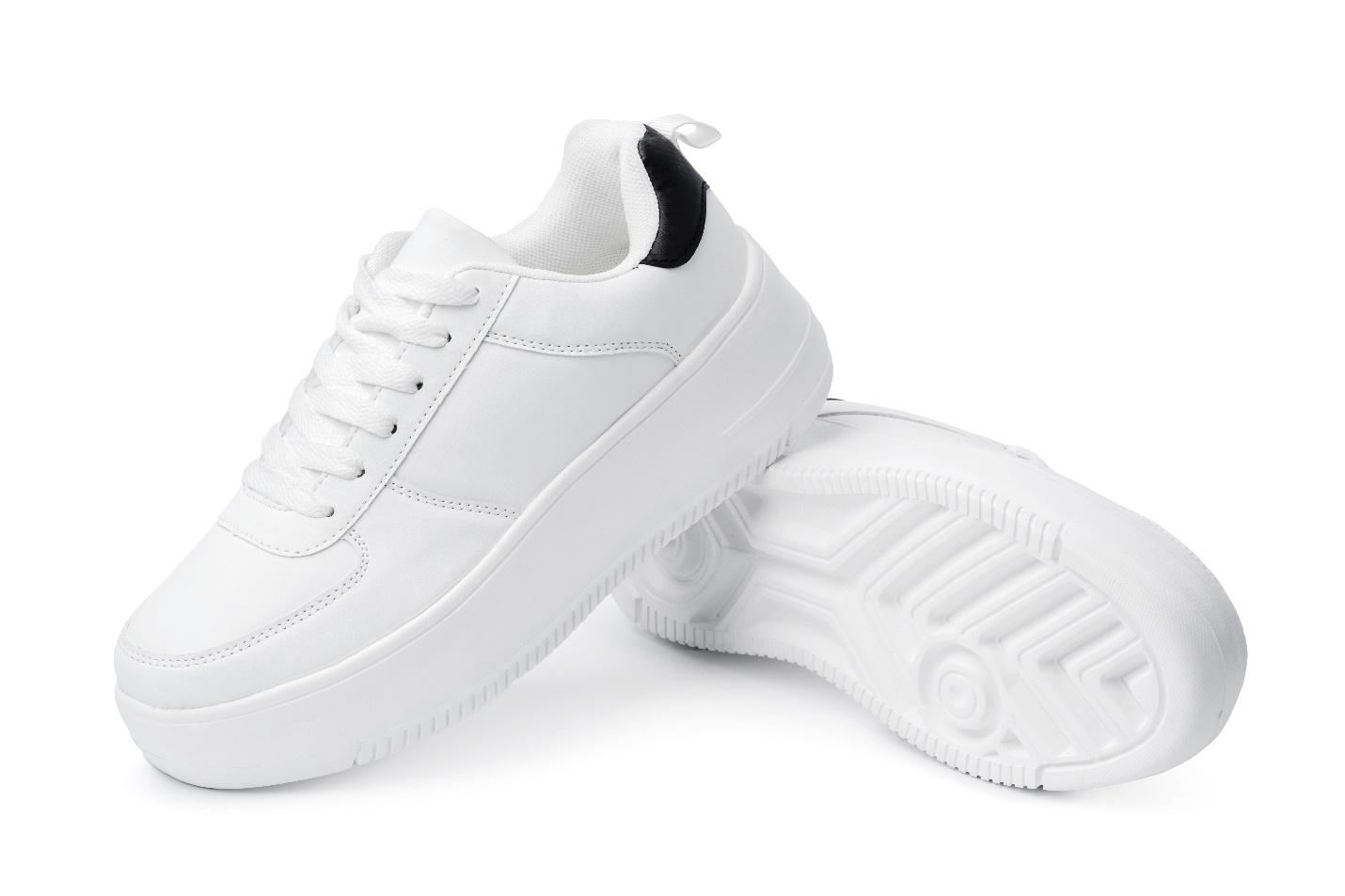
They respect your mileage. Between commutes, daycare drop-offs, grocery runs, and evening walks, it’s easy to clock 6–8 km without noticing. Foam midsoles and supportive geometry won’t make time, but they do reduce fatigue, which is the difference between “let’s do one more errand” and “not a chance.”
They flex with your wardrobe. A neutral sneaker under straight jeans and a trench looks smart; the same pair grounds a knit dress or matches athleisure. If the palette is calm (greys, creams, olives, navy), mixing is effortless.
They scale with life phases. Feet can widen during pregnancy, arches can drop postpartum, and busy seasons demand low-maintenance gear. Sneakers that come in multiple widths and last shapes meet you where you are.
Fit first: the 3 checks that matter
- Length: Aim for a thumb’s width between your longest toe and the end of the shoe. You need room for downhill walking, hot days, and swelling.
- Width & volume: If your pinky toe feels pinched or the midfoot feels strangled, try a wide (D) or extra-wide (2E) option. This is where New Balance often wins: many of its everyday and performance models come in multiple widths. Some brands offer this too—look, ask, and try.
- Heel security: Your heel shouldn’t slosh around. If it does, try a runner’s heel-lock lacing pattern before abandoning the size.
Side note for pregnancy/postpartum: A lot of people go up half a size permanently. Give yourself permission to size accordingly.
Cushioning vs. support: what you actually feel
- Plush daily comfort (great for walking and long errand days) often uses thick, compliant foam. Think Fresh Foam (New Balance), Clifton/ Bondi-style foams (Hoka), or Boost (adidas). These feel soft underfoot and roll you forward.
- Responsive pop (great for short jogs, gym classes, pushing a stroller at pace) uses springier compounds. Examples include FuelCell (New Balance), React (Nike), or FF Blast (ASICS).
- Stability help is no longer a brick under your arch. Modern stability uses subtle geometry to keep ankles from collapsing inward—useful if you’re fatigued or carrying a toddler on one hip. You’ll see this in shoes like the NB 860, ASICS Gel-Kayano, Saucony Guide, etc.
If you’re unsure, try one plush neutral pair and one mild-stability pair on the same day and walk a loop you know. Your knees and hips will vote.
Lifestyle vs. performance: two lanes (you might need both)
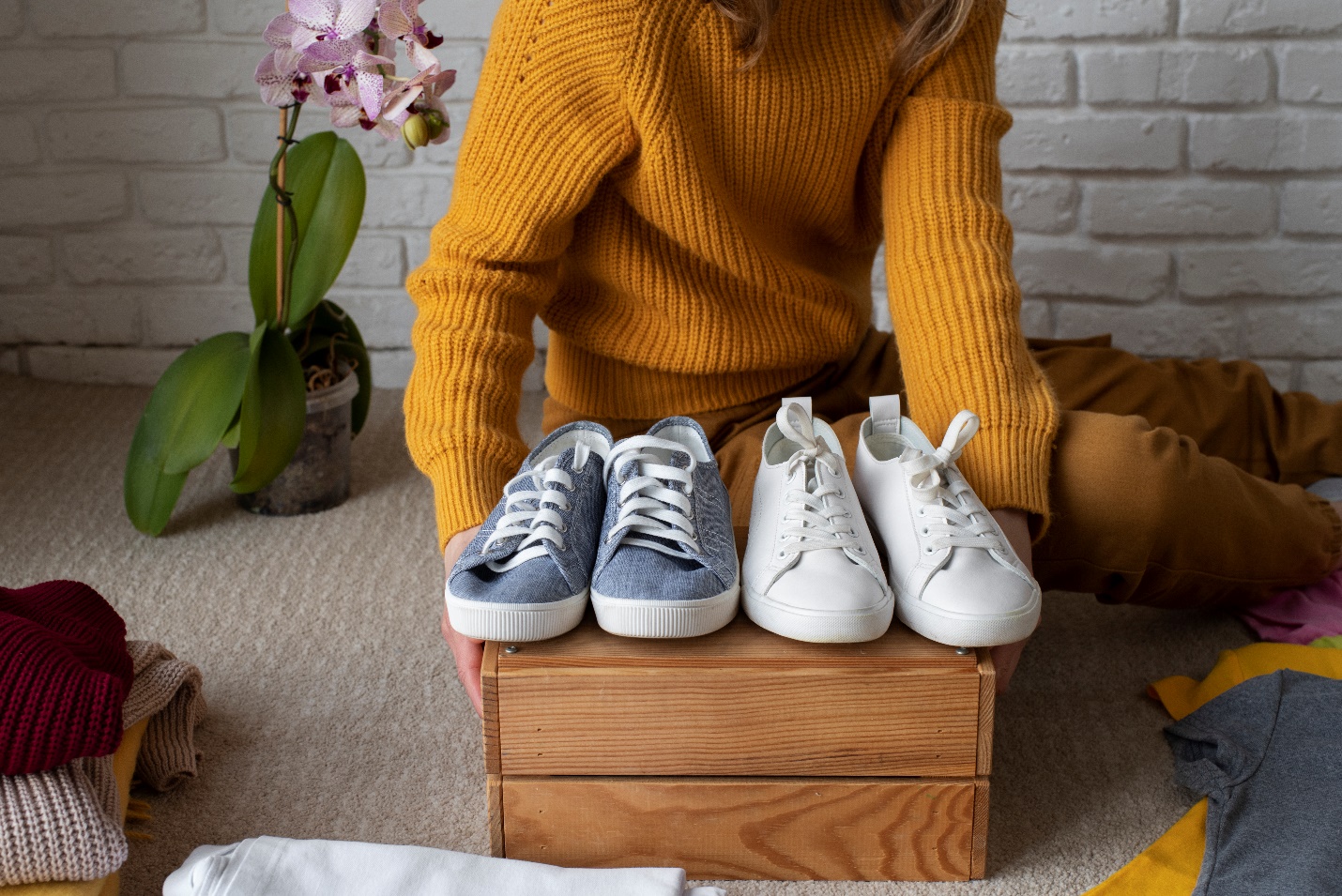
- Lifestyle sneakers (court silhouettes, suede/mesh heritage styles) are outfit workhorses. They dress up easily and photograph beautifully, but they’re not built for repeated runs. Examples: New Balance 550/990, adidas Samba/Gazelle, Nike Dunk, Reebok Club C.
- Performance trainers are designed for impact. They shine for long walks, brisk stroller loops, and mixed gym days. Examples: New Balance 1080/860, ASICS Nimbus/Kayano, Hoka Clifton/Arahi, Nike Pegasus/Structure.
Best-case scenario: rotate one of each. Your knees (and your outfits) will thank you.
Why New Balance keeps showing up in mom conversations
This isn’t hype; it’s infrastructure. New Balance puts multiple widths into mainstream models, keeps half sizes in stock, and spans both lanes above (lifestyle and performance) with consistent fit. The brand’s cushioning families—Fresh Foam for plush daily comfort and FuelCell for a livelier feel—are easy to understand and choose between. Heritage styles (990, 2002R, 574, 550) also happen to pair cleanly with the way a lot of moms dress now: pared-back, practical, and quietly polished.
If you’re curious about their current range and widths, check their official site for the latest drops and sizing info. Use the rest of this guide to decide what kind of shoe you actually need first—then browse with a purpose.
Model archetypes (with balanced examples)
- The all-day cruiser: Cushy neutral trainers that feel like small trampolines.
Examples: New Balance Fresh Foam 1080; Hoka Clifton; adidas Ultraboost Light.
Use case: Errand marathons, city breaks, walking commutes. - The subtle stabilizer: Neutral-feeling shoes that gently guide a tired gait.
Examples: New Balance 860; ASICS Gel-Kayano; Saucony Guide.
Use case: Postpartum months, long days on hard floors, knees that grumble. - The quiet style icon: Suede/mesh or clean leather that dresses up.
Examples: New Balance 990/2002R/550; adidas Samba/Gazelle; Nike Killshot 2.
Use case: School events, casual offices, “I want comfy but put-together.” - The park-proof pair: Trail or hybrid outsoles with grip and toe protection.
Examples: New Balance Hierro; Salomon XA Pro 3D; Nike Pegasus Trail.
Use case: Playgrounds, gravel paths, rainy-day errands.
Pick one archetype to solve your #1 problem first; add a second if your week has two very different modes.
Styling playbook (zero fuss, maximum payoff)
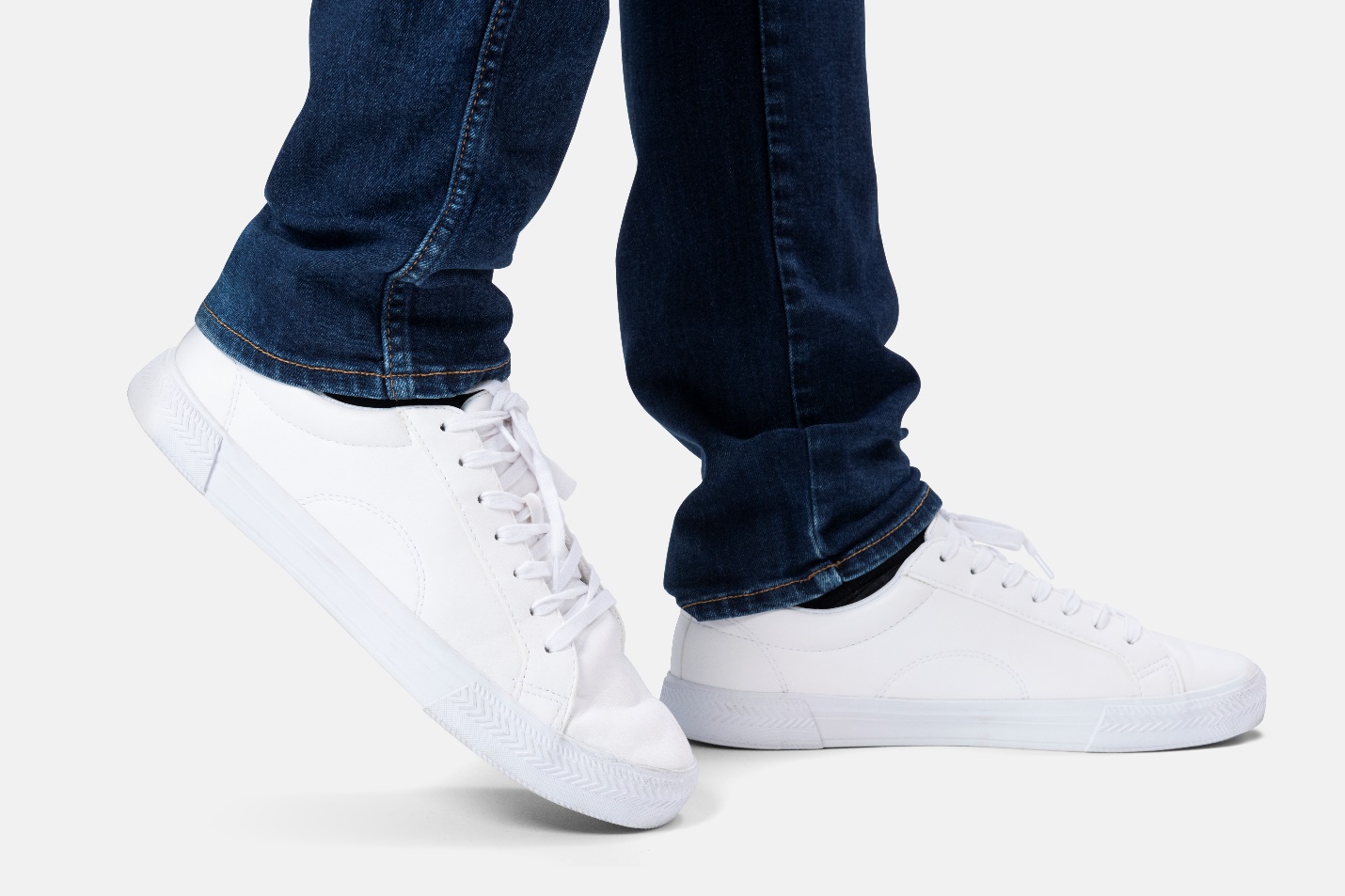
- School-run uniform: Neutral lifestyle sneaker + straight jeans + tee + trench or utility jacket + cross-body. Swap denim for a knit midi and it still works.
- Gym-to-brunch: Cushioned trainer + ribbed leggings + half-zip or oversized button-down + tote. Add chunky socks that peek above the collar for 2025 energy.
- Smart casual: Court-style lifestyle sneaker + pleated trouser + fine-gauge knit or crisp shirt. If the sneaker is white/cream, keep the rest tonal for polish.
- Rain plan: Trail-leaning pair + tapered jogger + shell. Grip matters more than you think on slick sidewalks.
Keep the palette tight (two neutrals + one accent) and mornings get easier.
Durability, rotation, and when to replace
- Performance trainers: 300–500 miles (roughly 6–12 months of heavy walking).
- Lifestyle pairs: Often longer—watch the outsole and midsole rebound.
Replace when: the foam feels flat, the tread is smooth on one side, or your joints complain after “normal” days. Rotating pairs prolongs life and lets foams rebound fully between wears.
Care that actually works (and takes 5 minutes)
- Quick clean: Soft brush + mild soap for mesh/suede; damp cloth for leather.
- Dry right: Air-dry only—heat breaks down glue and foam.
- Freshen the look: New laces (satin ribbons if you like), insole swap, or a Magic Eraser on white sidewalls.
- Storage: Shoe trees in leather styles; let performance pairs rest 24 hours between long wears.
Where to shop (and how to test well)
- Brand sites (e.g., Tactics New Balance) for the deepest size/width runs and the newest colorways.
- Specialty running stores for proper try-ons, gait checks, and advice you can feel in your knees by next week.
- Multi-brand retailers for easy returns and side-by-side comparisons.
- Resale/secondhand for lightly worn or past-season gems—ask for outsole and insole photos.
In-store test: Wear your usual socks. Walk fast. Take a small jog. Try a ramp if the store has one. Your body will give you better feedback than any product page.
Common missteps (easy to avoid)
- Choosing a stylish lifestyle pair and then running in it—save it for outfits.
- Sizing “snug so it looks sleeker”—your feet swell, and comfort is the look.
- Ignoring widths—hot spots vanish when the shoe actually fits your foot.
- Expecting one pair to do everything—if your week includes workouts and dress-casual moments, you’ll be happier with two.
A quick starter shortlist (by need)
- “All-day comfort, neutral gait.” New Balance 1080; Hoka Clifton; ASICS Nimbus.
- “I need gentle guidance.” New Balance 860; Saucony Guide; Brooks Adrenaline.
- “Looks smart with trousers.” New Balance 990/550; adidas Samba; Nike Killshot.
- “Kids + playgrounds + rain.” New Balance Hierro; Nike Pegasus Trail; Salomon Sense Ride.
Use this to narrow, then try pairs on the same day so you can really feel the differences.
The takeaway
This isn’t about chasing a trend; it’s about dressing for a life that moves. The right sneakers make long days feel shorter, turn “I have to” into “I can,” and slot into outfits without a second thought. New Balance enters the chat so often because the brand covers widths, offers clear cushioning options, and straddles the line between performance and everyday style—useful realities for busy moms.
Start with fit, pick the cushioning you enjoy, choose a palette that plays with your closet, and—if New Balance is on your list—check their site to see width availability and current color runs. Then get back to the life you’re outfitting: the drop-offs, the big meetings, the playground minutes you’ll miss later. The right sneakers won’t make any of it easy, but they’ll make all of it easier.


Ashley Pugh ;
Ashley Pugh is one of the Co-Founders of Familydaysout.com and has been committed to writing family related content since 2008. There isn't much about family attractions that Ashley doesn't know, after visiting hundreds of them worldwide over the last 20 years.
Leave a comment