



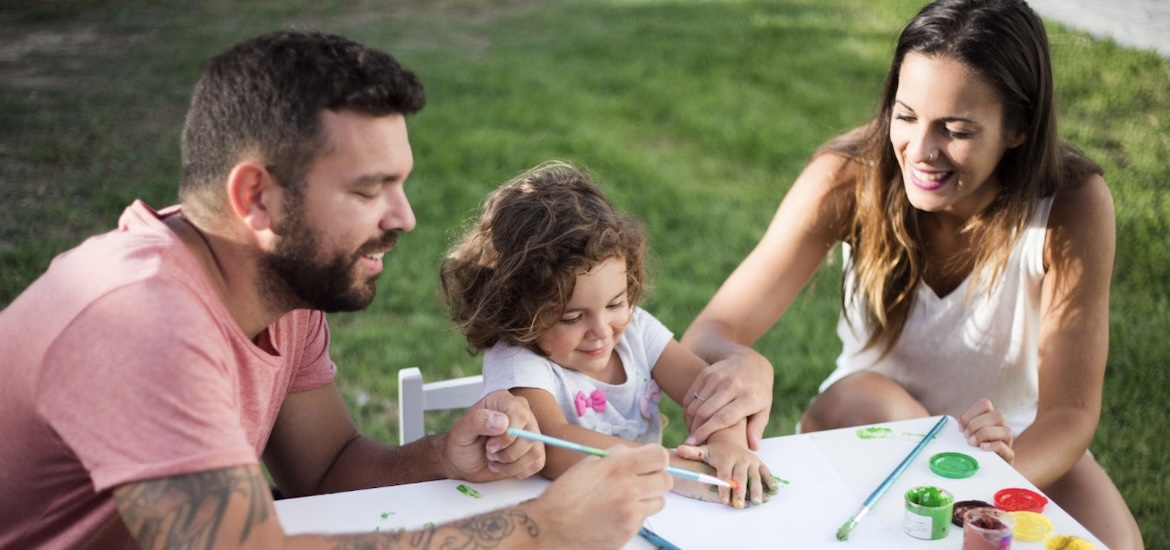







That’s the power of painting as a mindful practice. For parents juggling endless to-do lists, work obligations, and family responsibilities, stress can feel like a constant companion. While activities like yoga and meditation often come to mind when considering mindfulness, painting offers a creative and enjoyable way to anchor yourself in the present moment. You don’t need to be a professional artist. The magic lies in letting go of expectations and embracing the process.
This article explores how painting can become more than a hobby it can be a tool for mindfulness and stress relief, accessible to any parent who’s willing to pick up a brush.
Understanding Mindfulness and Its Role in Stress Relief
Before diving into the art of painting, let’s pause to unpack mindfulness itself. At its core, mindfulness is about being fully present: noticing your thoughts, feelings, and surroundings without judgment. It’s not about “emptying your mind” but rather about paying attention to what’s happening right now.
Research consistently shows that mindfulness practices reduce stress, improve focus, and even enhance emotional regulation. For parents, this can translate into more patience during bedtime battles, better clarity when balancing work and home life, and an overall sense of calm amid chaos.
The challenge? Traditional mindfulness practices like meditation can sometimes feel inaccessible. Sitting in silence with racing thoughts is daunting for many, especially for parents whose days rarely stop moving. That’s where painting steps in.
Painting naturally embodies mindfulness. Each brushstroke draws you into the present. The act of blending colours or watching paint spread across a canvas forces you to slow down, to notice, and to let go of multitasking. It’s mindfulness in motion.
Why Painting Works as a Mindful Practice
So, why does painting lend itself so beautifully to mindfulness? The answer lies in how it engages both your mind and body.
First, painting encourages focus. When you’re choosing colours, sketching shapes, or layering textures, your attention shifts away from the stressors of the day. That looming work deadline or the endless pile of laundry fades into the background as your brain concentrates on a single, creative act.
Second, painting fosters a state of “flow.” Psychologists describe flow as a mental state where you’re so absorbed in an activity that time seems to slip away. Parents often experience the opposite constant clock-watching, task-switching, and interruptions. Painting offers the rare gift of immersion, where worries loosen their grip.
Third, painting is tactile and sensory. The feel of a brush in your hand, the smell of fresh paint, and the visual satisfaction of colours coming to life can be incredibly grounding. Unlike scrolling through a phone or watching TV, painting requires active participation, which strengthens its calming effect.
And here’s the best part: you don’t need any prior experience. Mindfulness through painting isn’t about creating a masterpiece for the gallery wall. It’s about enjoying the process, the swoop of the brush, the swirl of colour, the act of creating something purely for yourself. Whether you’re painting abstract shapes or doodling simple flowers, the outcome matters far less than the journey.
Practical Ways to Use Painting for Mindfulness
The beauty of painting as a mindfulness tool is that it adapts to your lifestyle. You don’t need hours of uninterrupted time or expensive supplies to get started. Here are some practical tips to weave painting into your daily routine:
1. Focus on the Process, Not the Product
Let go of the pressure to make something “good.” Start with simple strokes, abstract splashes, or patterns. The act of moving your brush is what matters.
2. Pair Painting With Calm Surroundings
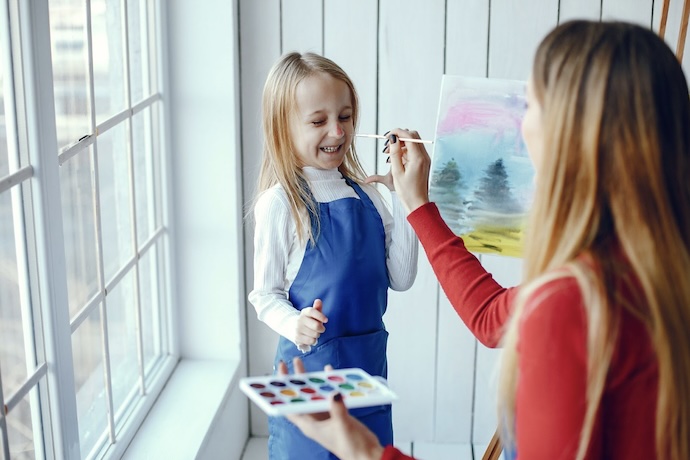
Play soft music or sit near a sunny window. The environment enhances the mindful quality of your painting session.
3. Paint Without a Plan
Try intuitive painting, choose colours based on your mood and see where your brush leads you. This practice connects your emotions to your creative expression without overthinking.
4. Use Prompts for Guidance
Feeling stuck? Try painting “how your day felt” in colours or creating a series of small shapes to represent emotions. These prompts keep you grounded in the present.
5. Make It Manageable
Parents rarely have unlimited free time. Even 10–15 minutes with a brush can be enough to reset your mind. Keep a small sketchbook and a travel watercolour set handy for quick creative breaks, or browse all painting options to find materials that fit your style and time limits.
6. Stay Consistent
Like any mindful practice, the benefits grow with regularity. A brief painting ritual—even just once or twice a week can gradually transform how you manage stress.
Painting isn’t about carving out perfect conditions; it’s about seizing small windows of time and making them meaningful.
Painting as a Shared Mindfulness Activity for Parents and Families
Painting doesn’t have to be a solitary practice. Involving your children can turn it into a powerful family ritual that benefits everyone.
Kids naturally approach art with curiosity and freedom, qualities adults often lose. When parents paint with children, they not only relax but also model creativity, patience, and presence. A family painting session isn’t about producing polished work; it’s about connection.
Here are some family-friendly painting ideas:
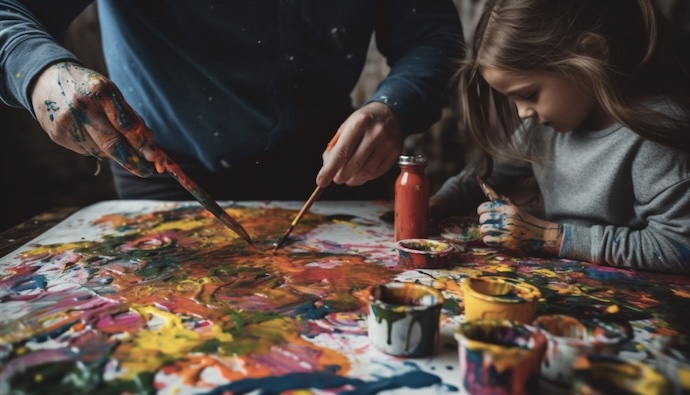
- Collaborative canvas. Lay out a big sheet of paper or canvas and let everyone add their strokes, creating a shared piece of art.
- Theme nights. Pick a theme—like “under the sea” or “autumn leaves”—and let everyone interpret it in their way.
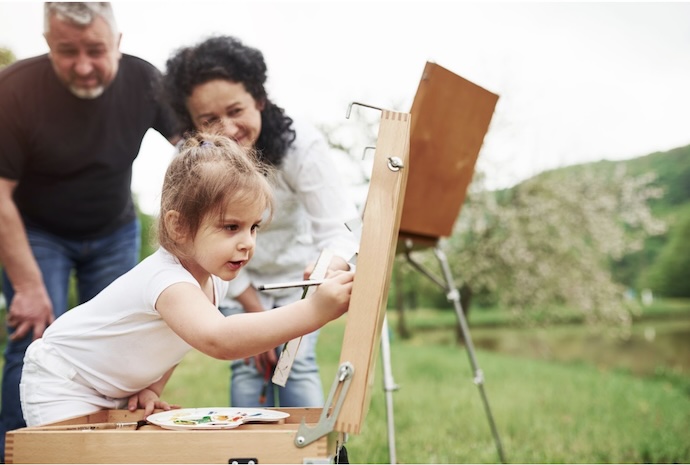
- Outdoor painting. Take paints outside for a change of scenery. The fresh air adds another layer of mindfulness.
For parents, painting alongside children can soften stress while deepening family bonds. It’s mindfulness wrapped in laughter, colours, and sometimes messy hands.
Conclusion
Parenting is rewarding, but it’s also demanding. Between the endless logistics, emotional labour, and daily responsibilities, finding time for yourself can feel impossible. Yet carving out even a few minutes for painting can open a door to mindfulness and stress relief.
Painting invites you to pause, to notice the present, and to let go of expectations. Whether you’re unwinding alone at the end of the day or sharing a colourful session with your children, the act of creating offers a gentle form of therapy without needing to call it that.
So the next time stress starts to creep in, consider reaching for a brush. Don’t worry about the outcome. Let the colours flow, let the brush move, and let yourself be carried into the present. Sometimes, the calm you’ve been searching for is hiding in a simple brushstroke.


Ashley Pugh ;
Ashley Pugh is one of the Co-Founders of Familydaysout.com and has been committed to writing family related content since 2008. There isn't much about family attractions that Ashley doesn't know, after visiting hundreds of them worldwide over the last 20 years.
Leave a comment