











Family mindfulness doesn’t have to mean everyone sitting cross-legged in silence. For most homes, it works better as tiny habits tucked into ordinary moments. A few seconds of noticing, breathing or slowing down can help adults and children pause before the next reaction takes over.
1. Begin the Day Without Reaching for a Screen
The first few minutes of the morning can set the mood for everyone. If the day starts with notifications, news, messages and rushing, children often feel that tension before they’ve even had breakfast.
Try keeping phones away until everyone has eaten or got dressed. Use that small pocket of time for a drink, a stretch, a cuddle with a younger child or a simple check-in about what’s happening that day. You’re not aiming for a perfect morning. You’re giving the family a softer start before the outside world gets a say.

2. Use Breathing as a Family Reset
Breathing exercises can feel awkward if they’re introduced only during a meltdown. Children may resist because it sounds like another instruction when they’re already upset. It helps to practise when everyone is fairly relaxed, so it feels familiar later.
You could try breathing out slowly while pretending to cool soup, tracing a finger around the palm, or counting three breaths before leaving the car. Kid-friendly breathing techniques work best when they feel playful enough for children to join in without feeling watched.
Families learning how to foster a child may find these small shared routines useful because a child coming into a new home can need time, patience and repeated signs that the adults around them are predictable.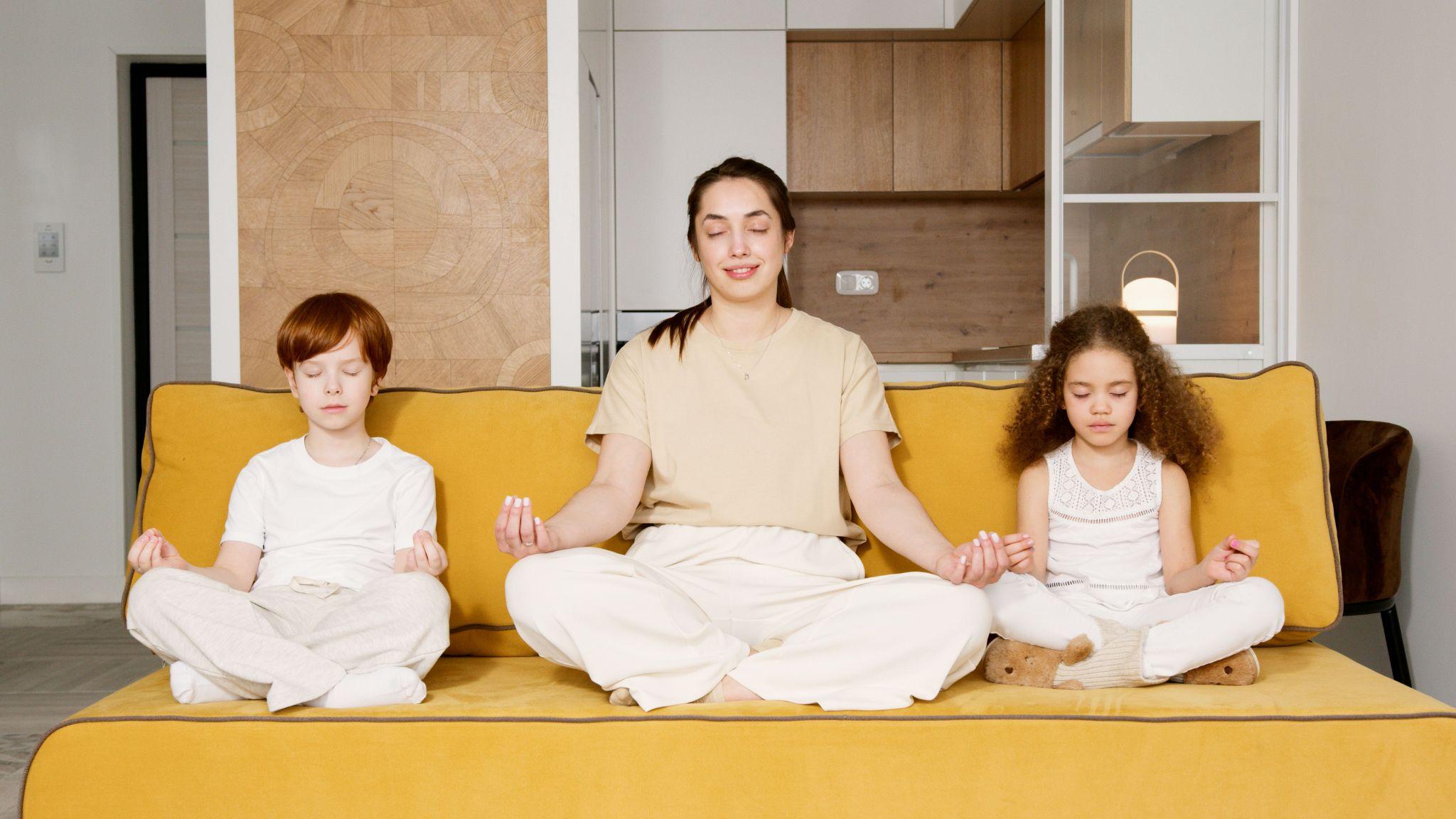
3. Make Mealtimes Less Rushed
Not every family can sit down together every night, and that’s fine. Work, clubs, contact arrangements, homework and tiredness can all get in the way. What matters is using some meals as a chance to notice each other rather than simply refuel.
Ask one question that doesn’t feel like an interrogation. “What was the best bit of today?” can work, but so can “What made you laugh?” or “What do you want tomorrow to be like?” If a child doesn’t want to answer, let them pass. Mindfulness at the table can be as simple as tasting the first bite properly, putting phones aside, or noticing that everyone has made it through another busy day.
4. Turn Chores Into Slower Moments
Housework with children nearby can be frustrating, but some jobs create natural pauses. Folding towels, watering plants, sorting recycling or wiping the table can become short moments of shared focus if you stop trying to race through every task.
You might ask a child to notice the smell of clean laundry, the sound of water filling a jug, or the feeling of warm plates coming from the dishwasher. Shared habits matter, and family routines support social and emotional growth when they give children repeated chances to feel connected and useful.

5. End the Day With One Small Reflection
Bedtime can turn messy when everyone is tired, so keep this short. Ask each person to name one good thing, one tricky thing or one thing they’re grateful for. Younger children may say something tiny, such as a biscuit, a playground game or the cat sitting on their bed.
That is enough. The point isn’t to force deep conversation at the end of a long day. It’s to help the family notice moments that might otherwise disappear.
Pick one habit and try it for a week before adding anything else. Mindfulness works best at home when it feels ordinary, repeatable and kind to the people actually living there.





Ashley Pugh ;
Ashley Pugh is one of the Co-Founders of Familydaysout.com and has been committed to writing family related content since 2008. There isn't much about family attractions that Ashley doesn't know, after visiting hundreds of them worldwide over the last 20 years.
Leave a comment